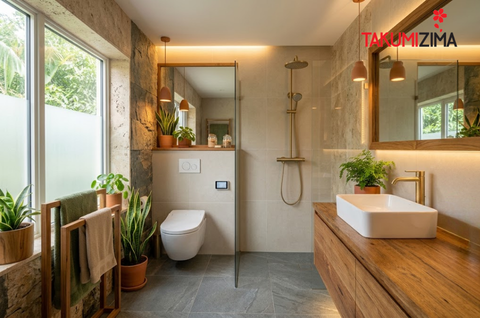
Getting the keys to your new home is always an exciting moment. You can't wait to look around and admire the newly finished space. The bathroom is bright, the tiles look spotless, and the sink and shower fixtures are brand new. At first glance, everything seems ready.
But a faucet could be leaking at a connection, the toilet might not flush properly, or the bathroom door lock could be sticking. These are things you might not notice just by looking around.
Before moving in, it's worth taking a little time to check these seven areas of your bathroom. Doing so can help you spot potential problems and bring them to the attention of the team handling the handover.
1. Are the floor and wall tiles properly finished?
Don't just stand in the doorway and take a quick look around. Take a closer look at the tiles, especially in corners, along the bottom of the walls, and where the tiles meet bathroom fixtures.
Look for cracked or chipped tiles, noticeable gaps in the grout, or areas where the finishing looks uneven. It's also worth checking less visible spots, such as behind the sink or around the base of the toilet, as long as you can reach them safely.
Even a small chip is worth photographing and noting during the handover.
Keep in mind, though, that you can't fully tell how securely the tiles are attached to the floor or walls just by looking at them.
2. Are the sink and faucet working properly?
If the water supply is connected and testing is permitted, turn on the faucet as you normally would. Watch how the water flows, then turn it off.
A few drops may still fall from the spout after you've turned it off. That's not necessarily a problem. But if the water keeps dripping without any sign of stopping, it's worth asking for a closer inspection.
One place that's easy to overlook is the area beneath the sink.
While the faucet is running and immediately after turning it off, look at the pipe connections, water lines, and drain trap for any signs of leaking.
If you notice water underneath, try to see whether it's coming directly from a connection or whether it may simply have splashed down from the sink.
Don't be too quick to assume there's a leak if you're not sure where the water is coming from.
Taking a photo of the area can also help a technician investigate the problem more accurately.

3. Are the shower and hot-and-cold water system ready to use?
Even a brand-new shower needs to be tested. Looking good on the outside doesn't necessarily mean everything is working as it should.
Once the system is ready and safe to use, test the features your shower actually has.
If it comes with a handheld showerhead, an overhead showerhead, or a diverter for switching between water outlets, try each available function according to the instructions provided during the handover.
As you test the shower, keep an eye on the connections for any signs of water leaking. Make sure the controls move smoothly and the diverter switches between functions properly.
The hot-and-cold water system needs a little extra care.
Before testing it, check with the person overseeing the handover that the equipment is ready and safe to operate. Avoid putting your hand directly under the water until you know what temperature to expect.
Not every bathroom has the same shower fixtures or water supply setup, so there's no need to test functions that haven't actually been installed.
4. Does the toilet flush and work as it should?
A newly installed toilet might look perfectly fine, but it's still worth checking how well it works.
If the water supply is ready and testing is allowed, try flushing the toilet using its button or lever.
For toilets with a tank, you'll usually hear water flowing back in after a flush. This is normal.
What you should watch out for is water continuing to run into the toilet bowl when the tank should already have finished refilling.
Don't forget to look around the base of the toilet and its water supply connection for any signs of leaks.
The toilet seat, lid, flush button, and other external parts should also be securely fitted and easy to use.
If there's a handheld bidet sprayer beside the toilet, check that it turns on and off properly and doesn't continue leaking after you've stopped using it.
5. Does water drain properly from the bathroom floor?
This is especially worth checking in walk-in shower areas.
A bathroom may have beautifully laid tiles, but if water keeps collecting in a corner of the floor, it can become an everyday inconvenience once you move in.
Start by taking a look at the floor drain. Is it neatly installed? Are there any visible obstructions around the opening?
If you'd like to test the drainage, speak with the team handling the handover first. They can guide you through the process or help carry out the test.
When there's water on the floor, pay attention to where it goes. Does it flow toward the drain, or does it collect in a puddle somewhere else?
It's important to understand the difference between two situations:
- A damp floor: The surface stays wet after coming into contact with water, but that doesn't necessarily mean there's standing water.
- Unusual water pooling: Water collects in one spot and doesn't drain away as expected under the conditions being tested.
If you notice water pooling or draining unusually slowly, record a short video so the responsible team can investigate the cause.
Avoid pouring large amounts of water onto the floor on your own or using a fixed drainage time as the standard for every bathroom.
A simple water test also isn't enough to tell you whether the entire drainage system has been installed and is working properly.

6. Does the bathroom door close and lock securely?
Even a brand-new bathroom door can become a nuisance if it doesn't close properly or the lock gets stuck.
Try opening and closing the door a few times.
Does it scrape against the floor? Do the hinges stick? Is it difficult to close all the way?
The lock should be easy to operate and keep the door securely closed as intended.
If you're testing a lock that operates from inside the bathroom, have someone outside to help in case you have trouble opening it again.
These may seem like small details, but they can make a real difference to your privacy and comfort once you start using the bathroom every day.
7. Are there any signs of dampness or water seepage on the walls and ceiling?
Before leaving the bathroom, take one last look at the areas that are easy to miss.
Check the corners, the lower sections of the walls, the ceiling, and even the adjoining walls if you can reach them.
Unusual stains, bubbling or peeling paint, and visibly damp patches are all signs worth documenting and having checked.
However, not every damp patch means the waterproofing has failed.
And just because you can't see any signs of water seepage doesn't necessarily mean the waterproofing is in good condition.
If you notice anything unusual, take a photo, note exactly where it is, and ask the team handling the handover to have it checked.
If necessary, you can also request the relevant waterproofing inspection records or ask for a more thorough assessment by a qualified professional.

If you find a problem, document it during the handover
You don't need to figure out how to fix every problem yourself.
What's more helpful is to note exactly where the issue occurs, describe what you've noticed, and keep photos or videos to share with the team responsible.
For example:
"Second-floor bathroom: water appears to be leaking from a pipe connection beneath the sink when the faucet is turned on."
A clear description like this makes it much easier to investigate the issue than simply saying, "There's something wrong with the sink."
Beyond these seven checks, other bathroom features may also need attention depending on what's included in the handover. These could include lighting, ventilation fans, electrical outlets, or glass shower partitions.
Electrical safety, glass installation, and construction quality should be assessed by qualified professionals using appropriate inspection methods. This checklist isn't a substitute for a formal construction inspection and handover process.
Conclusion
With the keys to your new home in your hands, it's only natural to feel excited about moving in and starting a new chapter in a space that's finally your own.
But before you start arranging furniture and unpacking boxes, give the bathroom a little extra attention.
Spotting and documenting potential problems on handover day gives you a chance to raise them with the responsible team early, rather than finding yourself scrambling to figure out what's wrong after you've already moved in.
Sometimes, a comfortable start in a new home begins with something as simple as taking the time to check the little things.
- Showroom Address: BTT10-01 Galaxy 4 - Van Phuc Galaxy Residential Area - 69 To Huu - Ha Dong - Ha Noi - Hotline: 0981867679
- Contact: 086.655.4899 - 081.494.6789
- Email: takumizimavn@gmail.com
- Website: https://takumizima.com/
- Fanpage: https://www.facebook.com/takumizimavietnam.vn